
Hakimi, Salah, Mane Lead African Stars to Watch at 2026 World Cup
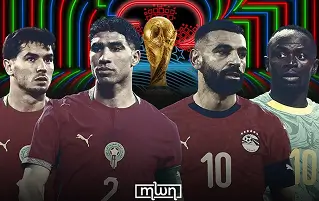
As the 2026 FIFA World Cup enters its defining stages, Africa’s finest footballers are once again commanding global attention. While the continent has long produced exceptional talent, this generation arrives with greater experience, stronger club pedigrees, and an unwavering belief that an African nation can challenge for football’s ultimate prize.
Leading the conversation are Morocco’s Achraf Hakimi, Egypt’s Mohamed Salah, and Senegal’s Sadio Mané, three players whose influence extends well beyond statistics. They represent different footballing philosophies, generations, and leadership styles, yet all carry the hopes of millions across Africa.
Alongside them, a new wave of emerging stars is proving that African football’s future is brighter than ever.
Achraf Hakimi: Morocco’s Relentless Engine
Few players embody the evolution of modern football quite like Achraf Hakimi.
Renowned for his blistering pace, tactical intelligence, and relentless attacking runs, the Moroccan full-back has become one of the world’s premier defenders. His ability to influence both ends of the pitch makes him indispensable for club and country.
Hakimi’s leadership has been instrumental in Morocco’s continued rise following their historic achievements on the global stage. More than a defender, he serves as the heartbeat of a Moroccan side that combines tactical discipline with fearless ambition.
His performances continue to demonstrate why many regard him as one of Africa’s most complete footballers.
Mohamed Salah: Egypt’s Enduring King
For nearly a decade, Mohamed Salah has been the standard-bearer for African football.
His extraordinary consistency, intelligent movement, and clinical finishing have established him among the greatest forwards of his generation. Even as younger stars emerge across the continent, Salah remains capable of deciding matches with moments of brilliance.
For Egypt, his presence extends beyond goals. He inspires confidence throughout the squad while carrying the expectations of a nation eager to reclaim its place among world football’s elite.
Every World Cup appearance further cements his remarkable legacy.
Sadio Mané: Senegal’s Inspirational Leader
Sadio Mané continues to define leadership through humility, work ethic, and decisive performances.
Whether pressing relentlessly from the front, creating opportunities for teammates, or delivering in crucial moments, Mané remains the emotional and tactical leader of Senegal’s talented squad.
His influence reaches beyond football. Admired for his philanthropy and deep commitment to community development, Mané has become one of Africa’s most respected sporting ambassadors.
As Senegal pursues another memorable World Cup campaign, his experience could once again prove invaluable.
Victor Osimhen: Nigeria’s Goal Machine
Nigeria’s attacking hopes increasingly rest on the shoulders of Victor Osimhen.
Blessed with explosive acceleration, aerial dominance, and relentless determination, Osimhen has developed into one of Europe’s most feared strikers.
His ability to stretch defences and convert difficult chances gives Nigeria a genuine match-winner capable of changing games against elite opposition.
If fully fit and firing, he could emerge as one of the tournament’s leading goalscorers.
Ademola Lookman: Creativity Meets Confidence
Another Nigerian drawing significant attention is Ademola Lookman.
Comfortable operating across the front line, Lookman combines technical skill with direct running and intelligent decision-making. His growing maturity has transformed him into one of Africa’s most exciting attacking talents.
His ability to unlock compact defences could prove decisive during the knockout stages.
Mohammed Kudus: Ghana’s Rising Maestro
Ghana’s brightest hope remains Mohammed Kudus.
Dynamic, fearless, and technically gifted, Kudus possesses the rare ability to carry the ball through midfield while creating and scoring goals.
His versatility allows him to influence matches from multiple positions, making him one of the continent’s most unpredictable attacking players.
Should Ghana make a deep tournament run, Kudus will almost certainly be at the centre of it.
Simon Adingra: Côte d’Ivoire’s Emerging Star
Fresh from helping Côte d’Ivoire establish itself among Africa’s strongest sides, Simon Adingra continues to build his reputation on the international stage.
His pace, dribbling ability, and willingness to attack defenders one-on-one provide the Ivorians with a constant outlet in transition.
Many observers believe this tournament could elevate him into football’s global elite.
Africa’s Golden Generation
The significance of these players extends beyond individual brilliance.
Collectively, they represent a continent that has invested heavily in player development, coaching, sports science, and tactical sophistication. African football is no longer viewed solely through the lens of athleticism. It is increasingly recognised for its tactical intelligence, technical quality, and competitive depth.
From Morocco’s disciplined organisation to Senegal’s physical intensity, Nigeria’s attacking flair, Egypt’s experience, Ghana’s creativity, and Côte d’Ivoire’s youthful exuberance, African teams now arrive at the World Cup with genuine expectations rather than hopeful ambitions.
Eyes on History
The 2026 FIFA World Cup presents another opportunity for Africa to challenge football’s established order.
While Hakimi, Salah, and Mané remain the continent’s headline names, they are joined by a generation determined to push African football further than ever before.
Whether through decisive goals, breathtaking assists, defensive masterclasses, or inspirational leadership, these stars will shape the tournament’s narrative and continue proving that Africa’s influence on world football has never been greater.
For football fans across the globe, they are not merely players to watch. They are symbols of a continent whose finest talent continues to redefine excellence on the world’s biggest stage.
0 Comments