
Burna Boy’s World Cup Halftime Show Is Bigger Than Music. It Revealed Africa’s Growing Football Influence
By Wuraola Kola-Ilugbo
When FIFA introduced the World Cup halftime show for the first time in the tournament’s history, it did more than borrow an idea from the Super Bowl.
It acknowledged a fundamental shift in what modern football has become.
For nearly a century, the FIFA World Cup has been defined by what happened during the ninety minutes on the pitch. Music, entertainment and celebrity appearances were largely confined to opening ceremonies or closing celebrations. The football remained the undisputed centrepiece.
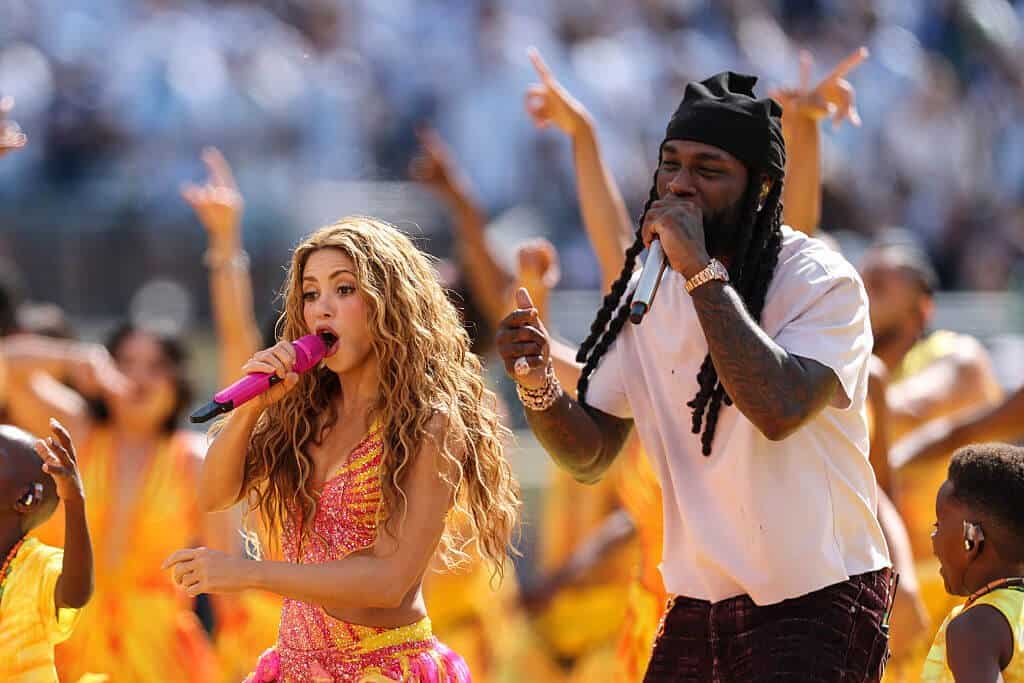
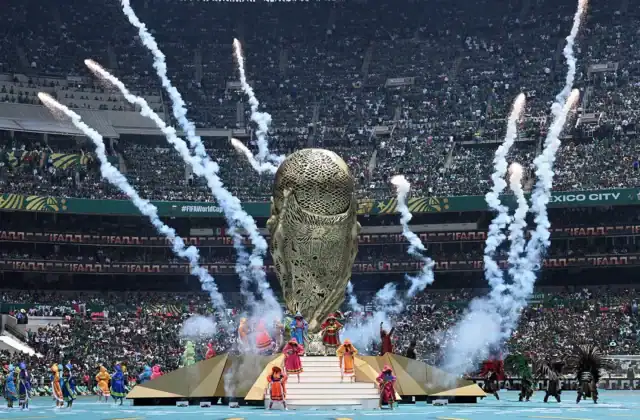
The 2026 World Cup final between Spain and Argentina changed that. Held at the New York New Jersey Stadium, the 11-minute halftime show, brought together some of the world’s biggest names in music, including Madonna, BTS, Justin Bieber, Shakira and Nigeria’s Burna Boy.
For many viewers, the performance was simply another spectacle in an already historic tournament. For football, however, it signalled something much bigger.
The World Cup is no longer positioning itself solely as the world’s biggest sporting event. It is increasingly presenting itself as one of the world’s biggest entertainment platforms, competing not just with other sports but with streaming services, social media and the broader attention economy.
That evolution helps explain why Burna Boy’s appearance mattered. His performance was not simply recognition of one successful African artist. It reflected a wider reality that football has been quietly embracing over the past decade: African culture has become one of the game’s most influential global assets.
Why Burna Boy?
It is tempting to view Burna Boy’s appearance as another milestone in the remarkable rise of Afrobeats. That would only tell part of the story. The more revealing question is why FIFA chose him for one of the most visible moments in the tournament.
Burna Boy built his international reputation by leaning deeper into his African identity. That creative confidence earned him the nickname African Giant, a title that later became the name of his critically acclaimed 2019 album.
The project marked a turning point not only in his career but also in the global rise of Afrobeats. African Giant received a Grammy nomination for Best World Music Album, introducing Burna Boy to audiences far beyond Africa. Two years later, he returned with Twice As Tall, winning the Grammy Award for Best Global Music Album and becoming one of the few Nigerian artists to receive the music industry’s highest honour.
Burna Boy’s relationship with football had also grown long before the 2026 World Cup. In 2023, he performed at the UEFA Champions League Final Kick Off Show.
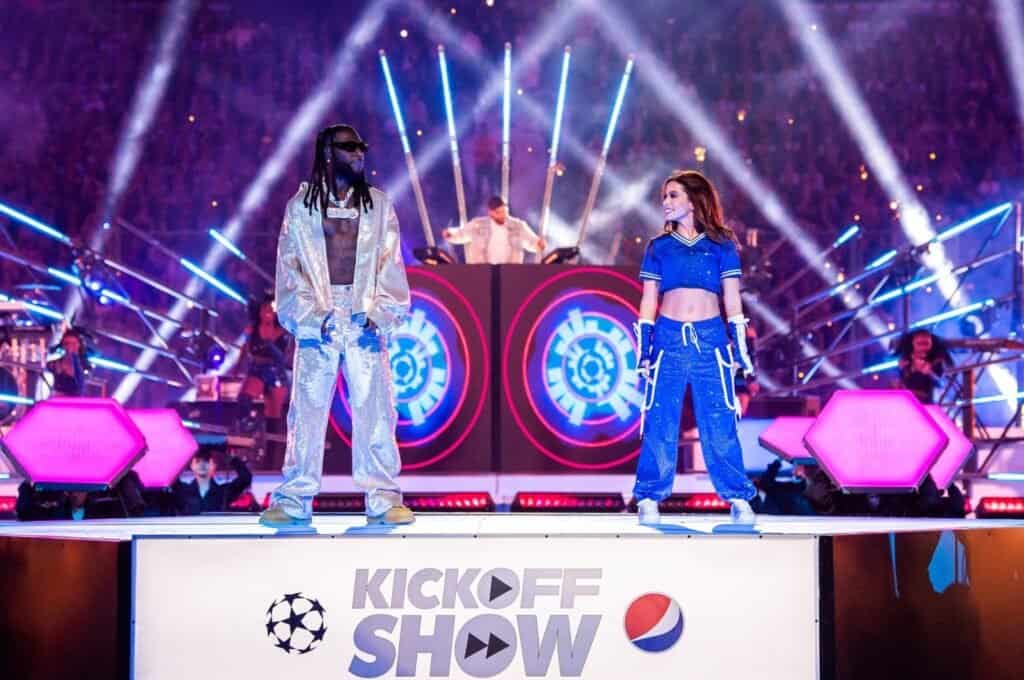
That journey helps explain why FIFA turned to him. The governing body was not looking only for a popular musician. It was looking for an artist whose career reflected football’s increasingly global identity.
By the time FIFA selected him to perform Dai Dai, the official song of the 2026 World Cup, alongside Shakira at the tournament’s opening ceremony, the decision felt less like a gamble than an acknowledgement of reality. FIFA was recognising an artist whose influence had already extended well beyond the recording studio and into one of the world’s most culturally influential sports.
“LOVE” pic.twitter.com/tdeZEYTUXV
— Burna Boy (@burnaboy) July 20, 2026
That is what made Burna Boy’s appearance significant. He was not on football’s biggest stage simply because he was African.
He was there because his career embodied the same qualities that modern football increasingly values: global reach, cultural relevance and the ability to bring together audiences from different countries through a shared experience.
In many ways, Burna Boy did not arrive at the World Cup as a guest. He arrived as one of the defining voices of a generation in which African culture has become impossible for global football to ignore.
Football’s Entertainment Revolution
For much of its history, football relied on one simple promise: the match itself would always be enough.
That assumption is now increasingly being changed. The introduction of a halftime show reflects football’s growing willingness to learn from other entertainment industries.
For decades, the Super Bowl has demonstrated how music can extend the cultural reach of a sporting event far beyond its traditional audience. Halftime performances generate global headlines, attract new viewers and create moments that live long after the game itself.
FIFA has now entered that space. The first World Cup halftime show was not designed simply to entertain spectators inside the stadium. It was created as a global media event, capable of generating conversations across music, sport, fashion and popular culture simultaneously.
That strategy reflects a broader truth about modern football. The sport is no longer selling matches alone. It is selling experiences.
In that environment, artists are no longer invited merely to entertain the crowd. They have become part of the tournament’s storytelling.
And that is precisely why Burna Boy’s appearance mattered. It was not simply about adding another superstar to the programme. It reflected FIFA’s belief that African music had become an essential part of football’s global cultural identity.
Soft Power Is Measured in Influence, Not Volume
The significance of Burna Boy’s World Cup halftime performance becomes clearer when viewed through the lens of soft power.
The term, popularised by political scientist Joseph Nye, describes a country’s ability to shape global perceptions through attraction rather than coercion. Culture, education, entertainment and ideas often prove more influential than political or military power.
History offers plenty of examples. The United States projected its influence through Hollywood. South Korea built a global cultural phenomenon around K-pop and television dramas. Japan transformed anime into one of its most successful exports, while the United Kingdom’s Premier League became one of the country’s most recognisable international brands.
Africa’s story has unfolded differently. Rather than being orchestrated by governments, much of the continent’s global influence has been driven by musicians, athletes, filmmakers and creators whose work has travelled through streaming platforms, social media and diaspora communities.
Afrobeats has become one of the clearest expressions of that shift. Nigerian artists now regularly top international charts, headline global festivals and collaborate with some of the biggest names in music. Football has become one of the most important stages for that rise.
In 2022, Davido performed Hayya Hayya (Better Together) during the closing ceremony of the FIFA World Cup in Qatar after contributing to one of the tournament’s official soundtrack songs.
Just months later, Rema became the first Nigerian artist to perform at the Ballon d’Or ceremony. In 2025, Tems also made history as the first African artist to perform during the inaugural FIFA Club World Cup Final Halftime Show.
Seen together, these moments tell a bigger story. Burna Boy’s appearance at the World Cup final was not an isolated honour. It was the latest milestone in football’s growing embrace of African culture.
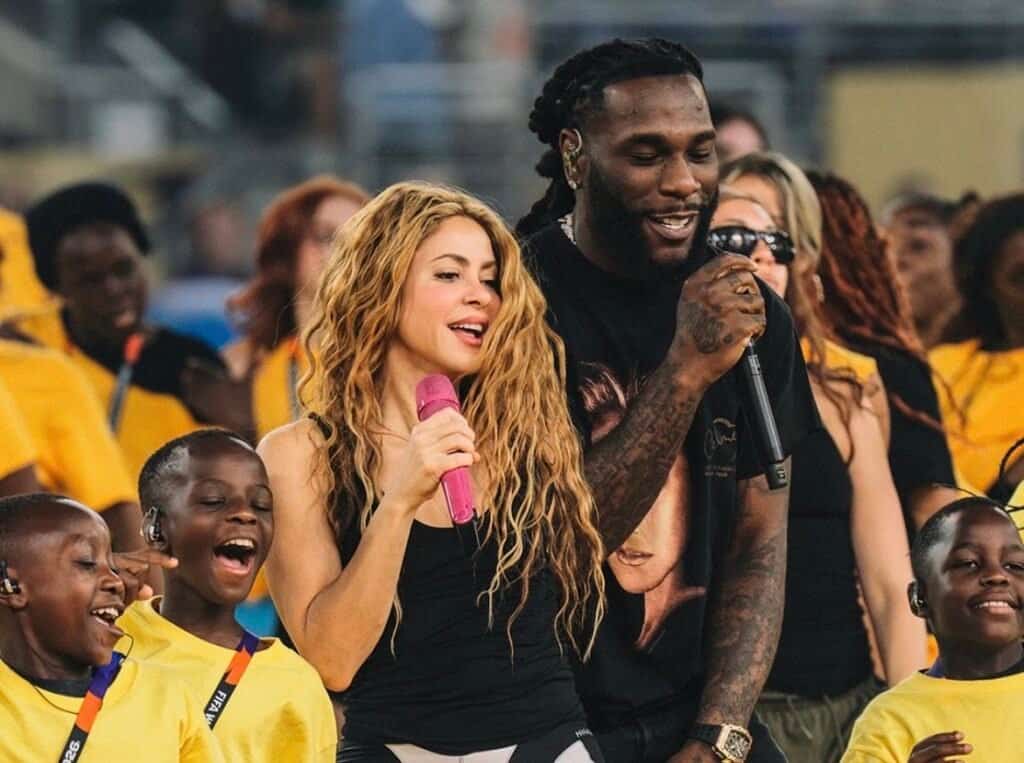
What was once considered a regional genre has become part of the soundtrack to the world’s biggest sporting events. Football is no longer inviting African artists simply to celebrate diversity. It is increasingly relying on them because they connect with the audiences the sport wants to reach.
That is what soft power looks like. It is not exercised through speeches or slogans. It is exercised when the world’s biggest sporting events increasingly rely on African culture to tell their stories.
Football Has Become Africa’s Biggest Cultural Amplifier
Football did not create the global rise of African music. It accelerated it.
Few industries possess the cultural reach of football. The sport attracts billions of viewers every year, while elite footballers command audiences that rival those of major entertainment brands.
That combination has transformed football into one of the world’s most powerful cultural distribution networks.
Consider how music now travels through the game.
A song played in a dressing room appears in a player’s Instagram story. Supporters recreate the dance on TikTok. Content creators use the same track in match edits. Streaming numbers rise.
Within hours, football has introduced an artist to audiences who may never have deliberately searched for African music.
This process has repeated itself countless times over the past decade.
Whether it is Burna Boy, Rema, Asake, Tyla, Tems or Wizkid, African artists increasingly find themselves woven into football’s everyday culture, not through formal partnerships, but through organic adoption by players and supporters.
That relationship benefits both industries. Football gains a soundtrack that reflects the tastes of younger audiences. African music gains one of the world’s largest cultural stages.
The Business Behind the Applause
Cultural success, however, does not automatically translate into economic power. That is where the next chapter of this story becomes more complex.
African artists are filling stadiums, breaking streaming records and performing on the world’s biggest stages. Yet important questions remain about who captures the long-term value created by that success.
Who owns the publishing rights? Who controls distribution? Which companies profit most from global streaming?
Where are the investment firms, record labels and intellectual property businesses that will ensure more of that value remains within Africa?
These questions extend beyond music. They reflect a broader challenge facing many of Africa’s creative industries.
The continent has become exceptionally good at producing globally relevant culture.
The next challenge is building the institutions capable of owning, protecting and commercialising that creativity over the long term.
Football presents similar questions. Africa exports some of the world’s finest footballers, yet many of its domestic leagues continue to struggle commercially.
Its clubs produce talent that enriches global football, but often without capturing the full economic value of that development.
The parallels are striking. Both football and music demonstrate Africa’s extraordinary creative capacity. Both now face the challenge of converting cultural influence into lasting economic influence.
A Different Story About Africa
Perhaps the most powerful aspect of Burna Boy’s World Cup performance was the story it told about Africa.
For decades, international narratives about the continent often focused on crisis, conflict or underdevelopment.
Football has long offered a different image. So has music. Together, they present Africa through creativity, excellence, ambition and innovation.
That matters because perception shapes opportunity. Every global stage reached by African artists creates new audiences. Every successful cultural export challenges outdated assumptions.
Every partnership between football and African music broadens the world’s understanding of what the continent contributes beyond raw talent.
In that sense, Burna Boy’s appearance was never simply about one artist performing one song.
It became part of a much larger story about how Africa increasingly influences global culture on its own terms.
Football’s Future Sounds Increasingly African
The first World Cup halftime show will be remembered for many reasons.
It marked FIFA’s embrace of a more entertainment-driven future. It introduced a new tradition to football’s biggest event. And it demonstrated that the boundaries between sport, music and popular culture are becoming increasingly blurred.
For Africa, however, it represented something even more significant.
It showed that the continent’s contribution to football is no longer measured only by the players it produces or the matches it wins.
Africa now helps shape the game’s atmosphere. Its music echoes through dressing rooms. Its rhythms soundtrack goal celebrations. Its artists headline football’s biggest stages. Its culture has become part of how modern football presents itself to the world.
That is why Burna Boy’s halftime performance mattered. Not because it was historic in isolation. But because it reflected a transformation that had already been taking place across football for years.
The world’s biggest sport is becoming an increasingly global entertainment business. And as that transformation continues, one thing is becoming difficult to ignore.
Africa is no longer simply participating in football’s cultural story. It is helping write it.
About the Author

0 Comments