
Inside FIFA’s $15 Billion World Cup: The Business Behind Football’s Biggest Tournament
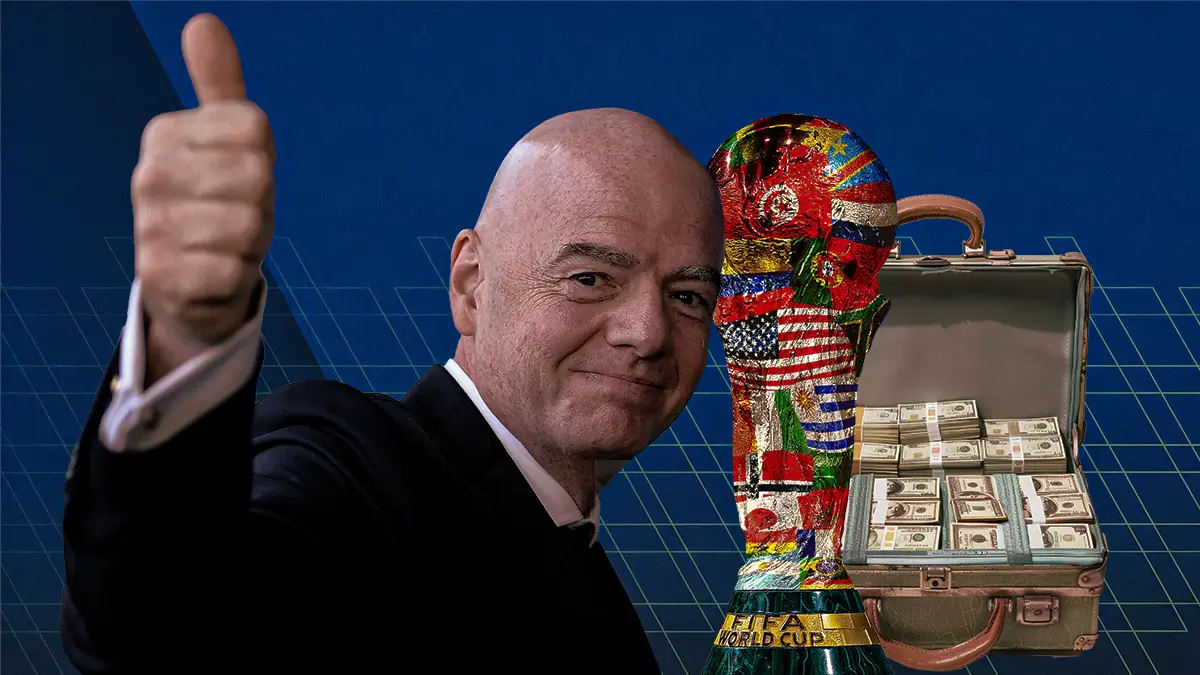
When Spain lifted the FIFA World Cup trophy at MetLife Stadium in New Jersey, they celebrated the greatest achievement in international football.
FIFA had something else to celebrate. The governing body had just delivered the most commercially successful World Cup in history.
As the tournament approached, the initial revenue projection of $8.9 billion increased rapidly. By April 2026, FIFA had raised its forecast to around $11 billion. Following the final, FIFA President Gianni Infantino announced that the organization’s total revenue for the 2023-2026 commercial cycle would exceed $15 billion, a record that has changed the face of global football.
Those figures reveal a much larger picture than FIFA’s balance sheet.
The 2026 FIFA World Cup was not simply football’s biggest tournament. It was one of the world’s largest entertainment businesses, driven by broadcasting rights, sponsorships, ticket sales, hospitality, licensing, merchandising and digital engagement. Every match, every sold-out stadium and every television audience contributed to an economic machine unlike anything the sport had seen before.
Football has always been the world’s most popular game. The 2026 World Cup has also shown it is becoming one of its most valuable commercial products.
Understanding how FIFA reached that milestone helps explain not only the future of the World Cup, but also the future of football itself.
The Decision That Made Football Richer
The biggest business story of the 2026 FIFA World Cup began nearly a decade before the tournament kicked off.
In 2017, FIFA approved the expansion of the men’s World Cup from 32 teams to 48, the biggest structural change in the competition’s history.
64 matches, 32 teams, six continents, one incredible tournament.
— FIFA (@FIFAcom) December 18, 2022
Whether in Doha or elsewhere, the magic of the #FIFAWorldCup has been felt by fans all around the world ✨🌍#FootballUnitesTheWorld pic.twitter.com/seVSDRwbqd
Officially, the decision was presented as a way to make football’s biggest tournament more inclusive. More countries would qualify. More confederations would be represented. Millions of supporters who had never experienced a World Cup would finally have the chance to watch their national teams compete on football’s grandest stage.
FIFA president Gianni Infantino said the expansion will also benefit “the development of football all over the world.” He added: “There is nothing bigger in terms of boosting football in a country than participating in a World Cup.”
That vision was realised. Africa increased its representation from five teams in Qatar in 2022 to ten in 2026. Countries like Cape Verde made their World Cup debut, and additional nations from Asia, North America, and Oceania also earned spots in the expanded tournament.
However, the decision encompassed more than just inclusion. It fundamentally transformed the financial landscape of the World Cup.
The tournament expanded from 64 matches to 104, resulting in forty extra fixtures that FIFA could market and sell. Each additional game created new broadcasting opportunities, increased sponsorship potential, expanded hospitality offerings, boosted ticket sales, and provided fresh digital content for audiences worldwide.
In modern sport, every match is a commercial asset. By creating forty more of them, FIFA expanded the tournament’s earning potential before a ball had even been kicked.
The strategy paid off. Record revenues, record attendances and record commercial activity confirmed that the expanded World Cup had become far more than a sporting experiment. It had become one of the most successful business decisions in football history.
The Ticket Gold Rush
The FIFA World Cup is one of the few sporting events that creates demand. The 2026 competition once again demonstrated this phenomenon.
During one of FIFA’s main ticket application windows, supporters submitted more than 500 million ticket requests from all 211 FIFA member associations, illustrating the truly global appeal of football’s biggest event. For FIFA, those numbers represented something every business wants: pricing power.
Demand comfortably exceeded supply. That gave football’s governing body the confidence to introduce one of the tournament’s most significant commercial changes: dynamic pricing. Long used by airlines, hotels and the entertainment industry, the system adjusts prices according to demand, meaning the most sought-after matches become more expensive as interest increases.
For many supporters, it marked a major change in how World Cup tickets were sold.
Official group-stage tickets were priced as high as $575, more than double the highest-priced equivalent tickets at the 2022 World Cup in Qatar. As demand intensified, some tickets for high-profile matches sold for more than $1,000.
The final attracted even greater attention. Reports suggested that the average resale price exceeded $12,700, while one listing on FIFA’s official resale platform reportedly reached an eye-catching $2.3 million, highlighting the extraordinary demand surrounding football’s biggest match.
Not everyone welcomed the changes. Rising costs, according to supporters and consumer advocates, could make the World Cup unaffordable for regular fans, especially those from lower-income nations. Critics questioned whether the biggest celebration in football was growing more exclusive.
But from FIFA’s perspective, the numbers told a different story.
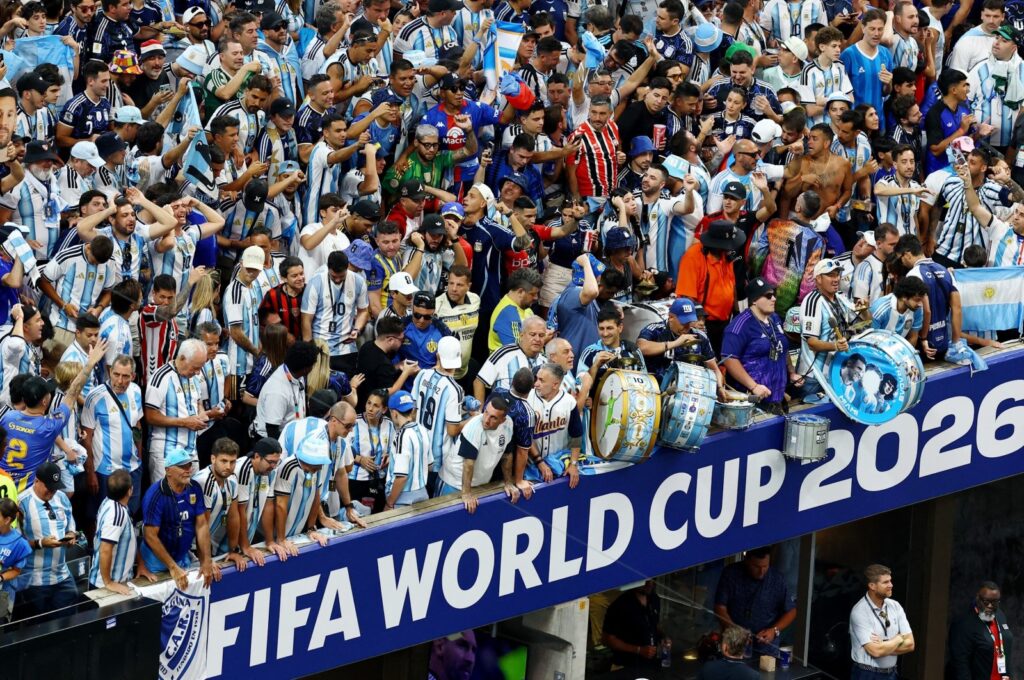
Stadiums stayed full despite the higher prices. Football Benchmark said that group stage matches recorded an average stadium occupancy of around 99 per cent, a sign of the tournament’s continuing appeal.
The message was clear. The World Cup is still one of the few sporting occasions that can create exceptional global demand, even at record prices.
Why Football Still Pays for the Biggest TV Rights
If ticket sales demonstrated the World Cup’s commercial potential, broadcasting was the bedrock of FIFA’s business model.
Television rights have been the biggest single contributor to the organisation’s tournament revenue for decades. The reason is simple: there are not many events that can attract the attention of hundreds of millions of people at the same time. The World Cup can do.
The worldwide appeal is why broadcasters are so eager to secure the rights to show the tournament, often paying billions of dollars years before a ball is kicked.
Advertising drives those investments. The bigger the audience, the more broadcasters can charge brands hoping to reach millions of viewers during football’s biggest event.
That investment paid off with the 2026 World Cup, which drew record audiences in several markets.
The United States Round of 32 victory over Bosnia and Herzegovina attracted more than 24 million viewers, peaking at almost 32 million as the match reached its closing stages. It became the most-watched English-language football broadcast in American television history.
The final between Spain and Argentina raised the bar even higher than before. While FIFA has yet to publish its global audience figures, the match attracted a record 63 million viewers in the United States, compared with 25.8 million for the 2022 World Cup final.
Those numbers matter far beyond television ratings. Every additional viewer increases the value of advertising space. Higher advertising revenues make broadcasting rights more valuable. More valuable rights generate more income for FIFA.
It is a cycle that has transformed the World Cup into one of the most lucrative properties in global sport.
Television no longer simply broadcasts football. It finances much of its biggest tournament.
Record Revenues Meant Record Rewards
The commercial success of the 2026 FIFA World Cup did not benefit FIFA alone. Participating nations also received the largest financial rewards in the tournament’s history.
FIFA distributed a record $871 million in financial compensation, comfortably surpassing every previous World Cup. Of that total, $655 million was allocated as performance-based prize money, while the remainder covered participation payments, preparation funding and benefits for clubs releasing players during the tournament.
With an extra $2.5 million to help with pre-competition preparations, every qualified nation received $10 million in participation funding. Just getting into the tournament was a financial boon for a lot of football federations.
Teams eliminated in the group stage earned $10.5 million in total. Reaching the Round of 32 increased that figure to $13.5 million, while Round of 16 teams collected $17.5 million. Quarter-finalists earned $21.5 million, the fourth-placed team received $25.5 million, third place was worth $29.5 million, runners-up collected $33 million, and Spain, as world champions, took home $50 million.
The scale of that growth illustrates how dramatically football’s finances have evolved.
When Italy won the 1982 FIFA World Cup in Spain, the champions received approximately $2.2 million in prize money. More than four decades later, the winners earn over twenty times that amount before they even consider commercial bonuses, sponsorship agreements and player incentives.
The World Cup has always crowned football’s champions. Today, it also creates some of the sport’s biggest financial winners.
Why Africa Was One of the Tournament’s Biggest Winners
Few regions benefited more from the expanded World Cup than Africa.
The continent doubled its representation from five teams in Qatar to ten in 2026, giving more federations access to FIFA’s prize money than ever before.
The result was historic. Collectively, African football federations earned more than $153 million, making the 2026 tournament the most financially rewarding World Cup in the continent’s history.
Morocco led the way after another impressive run, earning $31.5 million, while Egypt collected $17.5 million following their quarter-final appearance. Senegal, Algeria, Ghana, South Africa, Côte d’Ivoire, DR Congo and tournament debutants Cape Verde each received $13.5 million after reaching the Round of 32. Tunisia earned $10.5 million despite exiting during the group stage.
For some federations, those sums represent far more than prize money. They provide an opportunity to invest in coaching education, youth academies, training facilities, women’s football, sports science and grassroots development. While money alone cannot guarantee success, sustained investment can help build the structures that produce future generations of players.
The expanded World Cup therefore did more than increase Africa’s representation.
It redirected more of football’s wealth towards a continent that has long argued it deserves a greater place in the global game.
Whether that opportunity translates into lasting progress will depend not on FIFA’s payments, but on the decisions African football leaders make long after the tournament has ended.
Who Really Won the 2026 World Cup?
Spain lifted the trophy. But from a business perspective, the list of winners was far longer.
FIFA’s revenues were record-breaking. Record audiences tuned to broadcasters. Sponsors had unprecedented global exposure. Host cities welcomed millions of visitors, and hotels, airlines, restaurants, retailers and tourism operators enjoyed the influx of travelling supporters.
Sportswear manufacturers sold millions of replica shirts. Across streaming platforms, betting companies and digital creators, engagement spikes were seen as football held the world’s attention for over a month.
The business of football creates extraordinary opportunities. It also raises difficult questions about who ultimately gets to experience the world’s biggest sporting event.
The Next Frontier: A 64-Team World Cup?
The most telling business story of the 2026 FIFA World Cup may have come after the tournament was over. Record revenues, record attendances and record television audiences soon led to talk of an even bigger competition.
FIFA President Gianni Infantino confirmed that the organisation had received proposals to expand the men’s World Cup again, this time from 48 teams to 64, starting with the centenary tournament in 2030.
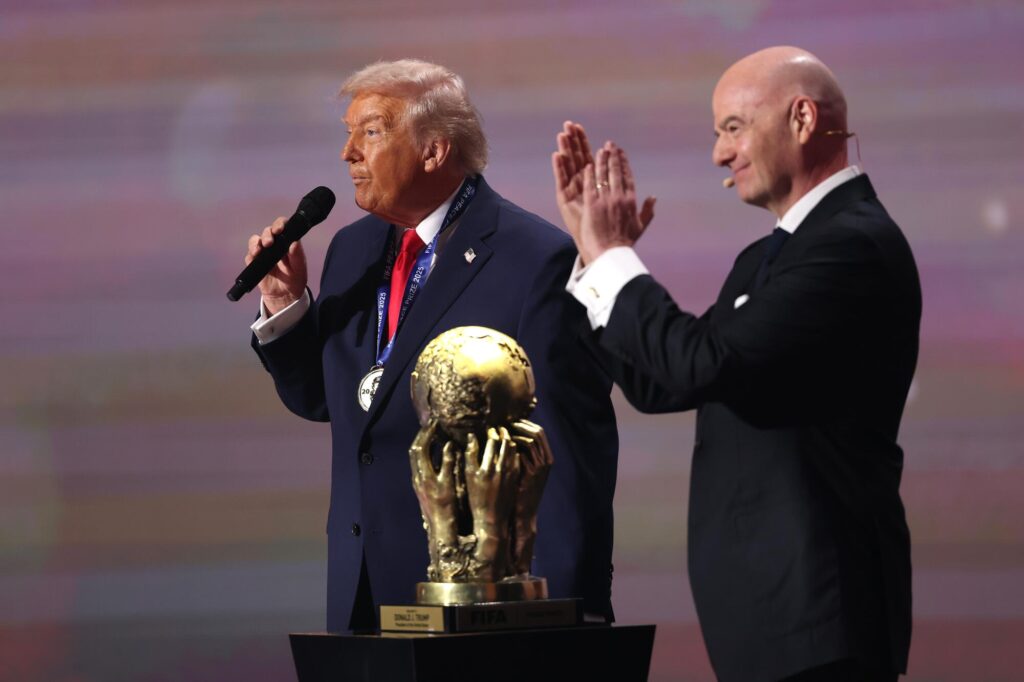
The idea was controversial. Fans say another expansion would mean more countries, especially those historically under-represented, would get to experience football’s biggest stage. More countries would mean more global engagement and perhaps new football markets.
Critics, however, warn that continual expansion risks diluting the quality of the competition, increasing player workloads and stretching an already demanding international calendar.
Yet behind those sporting arguments lies an unmistakable commercial reality.
A larger tournament would create more matches. More matches would generate additional broadcasting inventory, sponsorship opportunities, hospitality packages and ticket sales. Every extra fixture becomes another commercial asset in one of the world’s most valuable sporting events.
The success of the 2026 World Cup has strengthened the business case for further expansion.
Whether football needs a 64-team tournament remains open to debate. Whether FIFA sees commercial opportunities in one is far less uncertain.
More Than a Football Tournament
For most supporters, the FIFA World Cup is about unforgettable goals, dramatic upsets and the emotion of seeing nations compete on football’s biggest stage.
For FIFA, it is also the culmination of a four-year business cycle that now generates more than $15 billion.
The 2026 tournament demonstrated how far the World Cup has evolved beyond sport. Broadcasting rights continue to command record fees. Sponsors compete for global visibility. Millions of supporters travel across continents, while digital platforms extend the tournament’s reach far beyond the stadium.
Every goal, every sold-out venue, and every television audience contributes to an economic engine that is unlike anything else in football.
That financial success will determine the game’s trajectory. The tournaments will be structured differently, the rights to broadcast will be sold differently, sponsors will invest differently, and the number of teams that compete in future World Cups will be affected. Meetings in executive suites have an ever-increasing impact on game play.
The consequences are particularly weighty for Africa. Financial rewards and international recognition have both increased as a result of more representation. Assuming African football federations make prudent investments and establish long-term football systems, the continent’s football could benefit from the World Cup’s continued commercial success.
Spain might have left the trophy behind in New Jersey. On a similar note, FIFA removed any doubt that the World Cup has become one of the most valuable commercial assets in global sports.
Much was achieved during the 2026 FIFA World Cup beyond just crowning a champion. It proved that football’s most prestigious tournament now focuses beyond the pitch. More and more, it takes on the character of the game’s sponsor.



0 Comments