
What Actually Makes Football Academies Successful in Africa?

For decades, African football academies have been judged by a simple metric: how many players they send abroad.
A teen signs in Belgium. Another arrives in France. A third advances to the Premier League or the Champions League. The academy’s name travels. Scouts show up. Partnerships follow.
This logic has shaped football development across the continent for years, gifting the world some of its most exciting footballers and establishing Africa as an essential hub for talent.
The game is progressing. Investment trends are evolving, technology is reshaping the discovery of talent, and African football is becoming more connected to global finance in ways that were unimaginable just a generation ago.
So the real question is not “who got out?” It’s, ‘What does success look like today?’ Is it the European contract or the transfer fee that measures success? Or is it something more structural, the ability to create a football environment that continues to churn out talent long after the headline graduates have moved on
The answer to that question will shape the future of African football.
Africa’s Academy Narrative holds Greater Significance
Football academies have emerged as important institutions in African football.
From Dakar to Accra, Lagos to Abidjan, Casablanca to Johannesburg, they fill a critical gap between the informal game played on dirt pitches and the professional frameworks that pay actual salaries. Many of the continent’s most outstanding players over the last two decades have emerged from these academies, having been identified at a young age, rigorously trained, and given their first genuine opportunity to progress from pure amateurism.
For a long time, an academy’s value was simply measured by how many boys made their way to Europe. That metric continues to be a central focus in discussions, and it holds significant value. A plane ticket to Ligue 1 or the Championship has the potential to transform a family’s financial situation and significantly impact a player’s career. However, the most significant academies do not view the export of talent as the ultimate conclusion. They establish enduring coaching standards that persist, enhance local leagues, and foster identities that endure beyond the next transition.
The best of them leave something standing even after the brightest prospects board the flight.
The Academies That Changed African Football
A select few initiatives have fundamentally transformed perceptions of what can be achieved.
In Senegal, Génération Foot Academy transformed itself into one of the continent’s most respected talent factories through its partnership with FC Metz.
Most people know Sadio Mané, who played for FC Metz after graduating from Génération Foot, but the academy has produced a number of talented footballers.
The success story of Mané, though, is far from unique. Ismaïla Sarr and Pape Matar Sarr are among those who have gone through similar experiences.
The academy has always focused on more than just raw talent; it employs a proven development model that consistently produces players ready to compete at the highest levels.
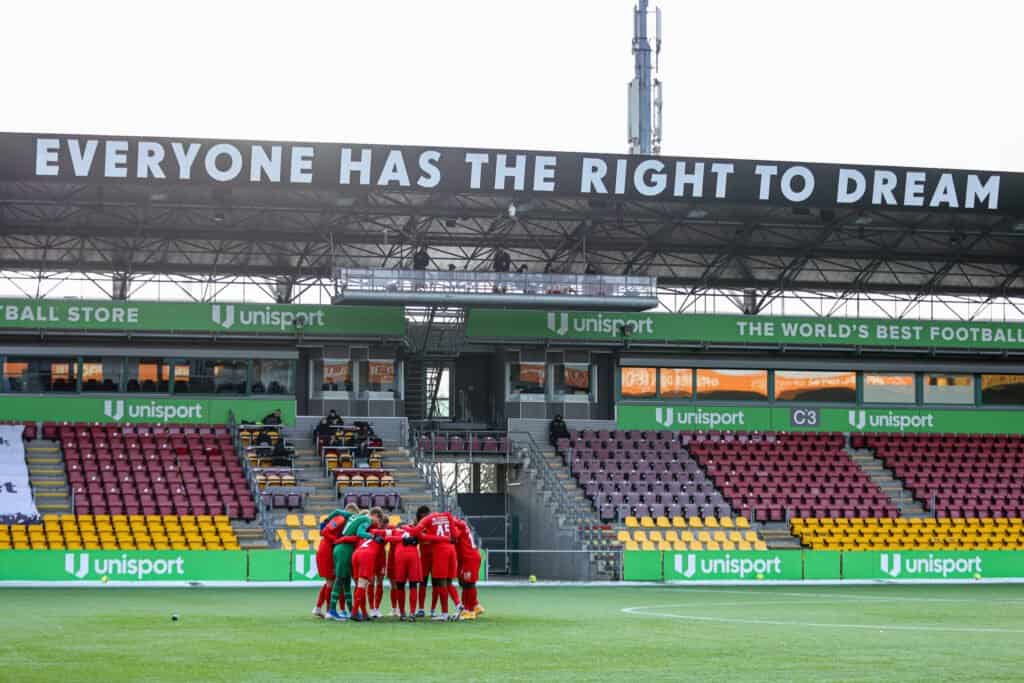
Ghana’s Right to Dream adopted a unique strategy. Founded in 1999 by Tom Vernon, a former scout for Manchester United, it represented a fusion of football training and various educational approaches. Notable alumni from this academy include Mohammed Kudus, Kamaldeen Sulemana, and Simon Adingra.
Right to Dream has become a global powerhouse in the football scene, owning a club and spearheading various development initiatives across multiple countries.
This organisation’s success demonstrates that a football academy today can serve as an educational hub, a talent development centre, and a thriving business all at once.
A number of legendary African footballers, like Yaya Touré, Kolo Touré, Emmanuel Eboué, Gervinho, Salomon Kalou, and Gervinho, were produced by the Ivorian academy system known as ASEC Mimosas Academy.
Nigeria’s Talent Factory and the Challenge of Expansion
Nigeria stands out as a powerhouse when it comes to the narrative surrounding academies in Africa. Even with a steady flow of exceptional talent, Nigeria’s development framework remains quite fragmented.
Numerous future stars emerge from local academies that may lack financial backing but are rich in determination and drive.
Victor Osimhen’s journey serves as a compelling case study. He emerged from the Ultimate Strikers Academy, used the 2015 U-17 World Cup as a springboard (Golden Boot, winner’s medal), and then bounced through Germany, Belgium, France and Italy to become one of the most feared strikers in Europe. While the system proved effective, it was heavily reliant on the alignment of individual circumstances.
Recently, young Nigerian talents such as Zadok Yohanna and others have demonstrated the vital role that academies are playing in connecting gifted Africans with international opportunities, even at a young age.

Yohanna played at the Ikon Allah Football Academy in Nigeria before joining the Swedish club AIK and finally signing for Brighton & Hove Albion. This shows that academies don’t need to be world-renowned to provide international avenues for their talent.
Many players have similar potential but do not get the same opportunities as those who succeed outside the continent.
Because of this, success at the academy cannot be determined only by the stars that show up. We must also use the systems that support everyone else to gauge it.
The Best Academies Develop More Than Footballers
One of the biggest misconceptions in football is that academies exist only to produce professional players.
The most successful academies do much more than that. They develop coaches. They improve sports science practices. They create educational opportunities. They give young people structure and discipline.
They give a route to those children who will never be professional footballers but can benefit from the atmosphere football creates.
This is especially true of Africa, where football often serves the dual purpose of sport and social institution.
Many academies serve as mentors, as educators, as life-skills teachers, and as social networks – all outside the context of football. A player may never play in the Premier League. That does not mean the academy failed.
But if the game helps create greater opportunities and stronger communities, as well as develop talented young players, then that is a significant achievement.
The Future of Scouting Will Change the Game
Video analysis has revolutionised the way we scout talent. A young talent in Accra or Dakar can now showcase their top highlights on platforms like Hudl or Wyscout, gaining visibility from influential figures beyond just the local scout available on a Tuesday. Performance data serves as a crucial tool for coaches, reducing reliance on instinct and enabling decisions grounded in the actual statistics.
The divide that previously existed between African academies and their European counterparts is closing in. Tools that once were locked away behind costly barriers are now integral to our everyday lives. That’s crucial. Hidden talents are finally being discovered. Coaches operate with enhanced insights. Players connect with audiences that were previously inaccessible.
An academy has evolved beyond merely being a venue for football instruction. It’s evolving into a hub that cultivates understanding, archives it, and shares it with others. Africa’s next significant advancement won’t come from a single standout athlete. It will emerge from organisations that turn outstanding performance into a replicable formula.


0 Comments